[Sam] was described by a faculty member in his department as “the best teacher I have seen in a decade.” He demonstrates excellence in every category of instructional evaluation, and he inspires students to “fall in love” with political theory, providing them with tools to understand and analyze political theory.
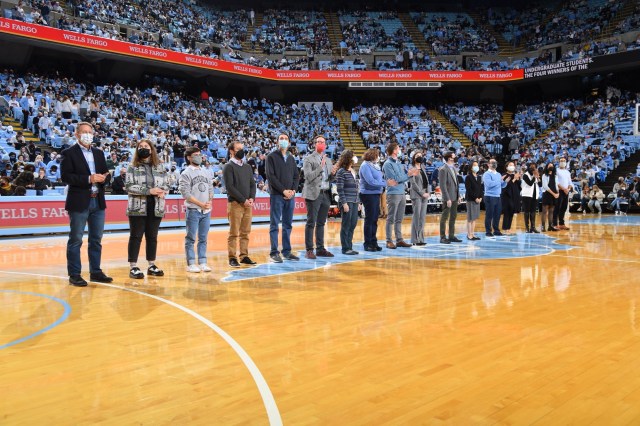
Citation, Tanner Award for Excellence in Undergraduate Teaching by Graduate Assistants 2022
As Instructor of Record
Modern Political Thought (POLI 271)
Introductory course on political thought, 1500s-1800s.
Taught: Fall 2020, Spring 2021, and Summer 2021
Learning Outcomes: Gain a general understanding of the texts and of the problems they seek to address. Creatively apply the historical arguments of the authors to hypothetical situations and problems of the present day, allowing you to better learn and test the theory. Critically read texts for reference to differences in religious belief, gender, class, race, and ethnicity. Compare theorists with one another. Evaluate which thinkers are closer to what you think to be true, and which have the better arguments. Assess the strengths and weaknesses of the texts covered in this class. Discuss and Debate with one another regarding the meaning of the texts and what might be good or bad, true or false about them. Develop your own ideas about these questions. Improve general capacity of reading, writing, and speaking.
“Sam is one of the best professors I have had at UNC. He constantly encouraged participation and gave multiple opportunities for questions and comments. The variety of assignments and journal entries also allowed for me to expand on my thoughts and receive helpful feedback. Sam remained enthusiastic throughout the entirety of the semester and made political theory seem easy to grasp!”
Student Evaluation, Spring 2021, Modern Political Thought
Everyday Political Theory (POLI 276)
Civic studies-oriented course designed to prepare students to use political theory and political economy in their daily life.
Taught: Spring 2022
Learning Outcomes: Understand differing views on membership, value (e.g. equality), and cooperation. Analyze differing approaches to goods provision. Combine normative analyses with descriptive, social scientific work. Explain the meaning and significance of the question “what should we do together?” Learn to ‘See like a citizen’ in your everyday life. Apply different perspectives in collaboration with team of classmates and community members on a local issue (e.g. gentrification, LGBTQIA+ student mental health, wheelchair accessibility in student housing). Present findings to the public.
A strength [of Everyday Political Theory] was trying to get us to think about this material and apply it to our everyday lives. Many poli sci courses use theories that aren’t personal or are removed from the individual, so this course was very different and challenging. Yet, it seems to have more daily and individual applications than many other philosophy and political theory courses.
Student Evaluation, Spring 2022, Everyday Political Theory
As Teaching Assistant
American Government in Changing Times (POLI 100) with Sarah Treul
Taught: Fall 2019
Course Description: Introduction to American political institutions and behavior.
Modern Political Thought (POLI 271) with Matthew Weidenfeld
Taught: Spring 2020, Fall 2022
Distinctive: class-wide simulation using the Reacting to the Past Curriculum
Ethics of Peace, War, and Defense (POLI 272) with Jeff Spinner-Halev
Taught: Spring 2023
Course Description: Introduction to major ethical theories of conflict and contemporary issues of just and unjust war.
Extracurricular Teaching and Related Service
PPE Reading Group 1: Shared Governance
Multi-week in-person reading group on Elinor Ostrom’s Governing the Commons. Discussions focused on the relationship between local knowledge, trust, physical constraints, and differential goods provision strategies.
PPE Reading Group 2: Political Theology
Multi-week zoom reading group on Luke Bretherton’s Christ and the Common Life. Discussions focused on the intersection of religion and politics, political theology, and PPE-type thinking across multiple theological traditions including Black Power, Pentecostalism, and Catholic Social Teaching.
The Problem of Evil & Suffering
Short seminar for undergraduates. Readings focused on contemporary philosophy of religion addressing the puzzle of theistic belief and the existence of suffering and evil. Emphasis on both theistic and atheistic arguments.
The Meaning of the University
Weekend seminar for graduate students focused on a variety of conflicting views of the modern university and its purpose.
Related Service
- Reestablished monthly teaching workshop for graduate students in political science Fall 2023.
- Tanner Awards Committee Member Fall 2022.
- Teaching Best Practices Panelist for UNC Fall 2023.
Teaching Interests
- Philosophy, Politics, and Economics (PPE)
- History of Political Thought (classical, medieval, modern)
- Constitutional Law and Civil Liberties
- The 1st Amendment
- Contemporary Theories of Liberalism
- Religion and Politics
- American Politics
- Ethics of Peace, War, and Defense
Awards
Both the UNC Department of Political Science and UNC-Chapel Hill as a whole have recognized my teaching with special commendations.
- John Patrick Hagan Award for Best Teaching Fellow UNC-CH Political Science Department 2021
- Tanner Award for Excellence in Undergraduate Teaching by Graduate Assistants 2022
 Samuel B Schmitt
You must be logged in to post a comment.